Spain national team scarf: how to choose the perfect model to cheer on La Roja
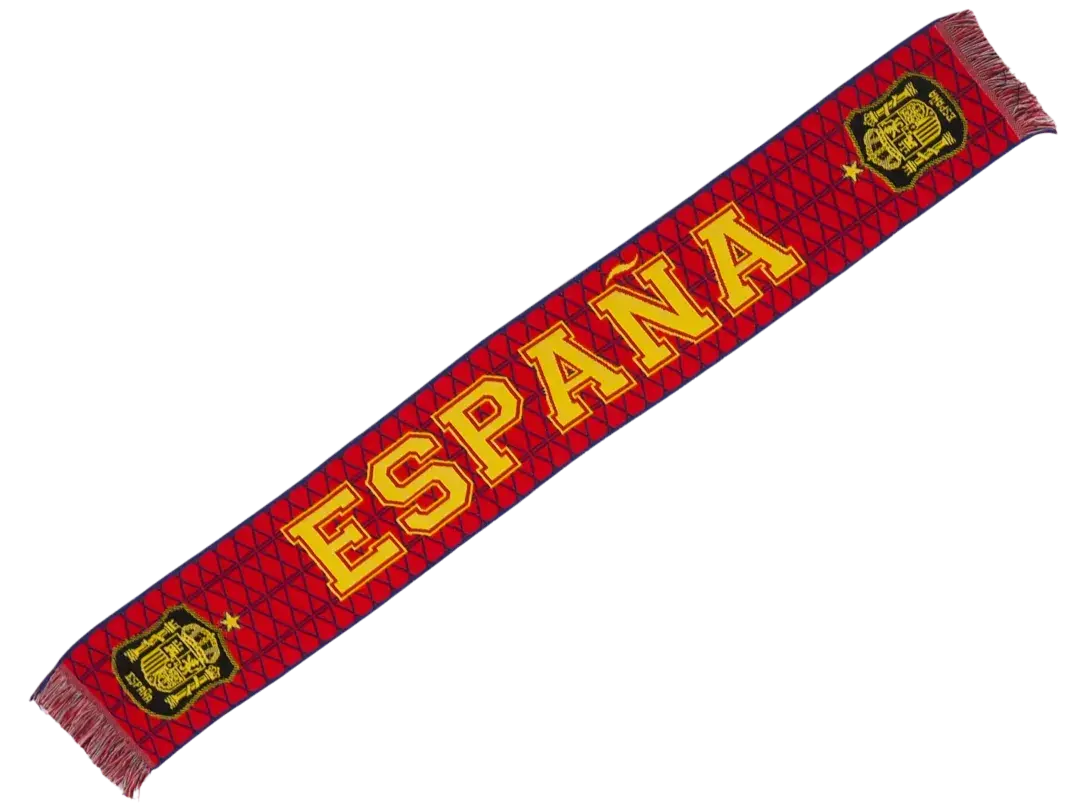
There is something that repeats every time Spain plays, whether it is in the Euros, the World Cup, or a summer friendly: there is always someone who arrives at the bar, the fan zone, or the stadium with a Spain national team scarf around their neck. It might be older than Iker Casillas in goal or from the last Euros, it might be brand new or slightly frayed… but it’s there, ready to stand up when the anthem plays.
The shirt design changes, the players are renewed, and the managers come and go, but the scarf remains one of the most constant symbols of La Roja. It doesn’t just keep you warm: it’s a flag, a banner, a lucky charm, and often, the way we say “I’m for Spain” without needing to say a word.
In this article, we are going to talk about the national team, its history, its colours, its nicknames, its fans, and why the Spain national team scarf has become a key piece of the fan’s “uniform”. And, of course, we will see how to choose the perfect model according to your style, your memories, and the way you experience the matches.
La Roja: a history of colours, nicknames, and generations
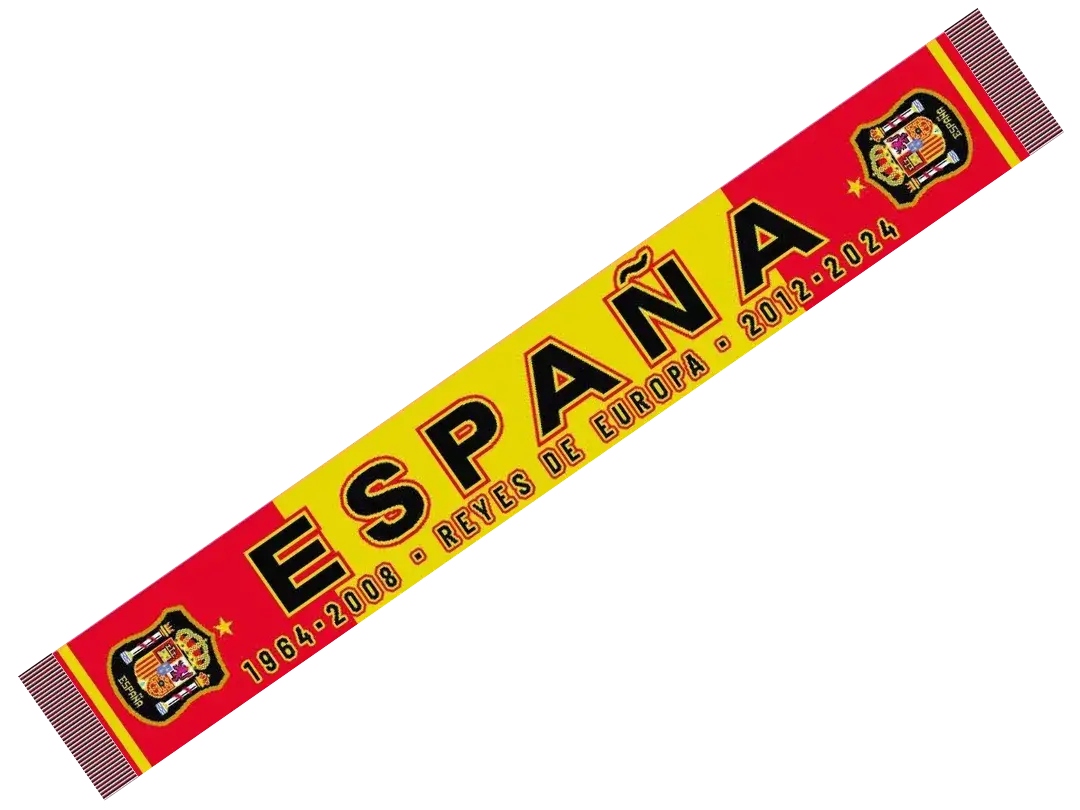
Spain hasn’t always been “La Roja”. Throughout its history, the national team has been known by several names: “La Furia Española”, “La Roja”, “La Selección”, “La Absoluta”. Each of them has marked a different era, with its own style of play and its own way of suffering (or enjoying) tournaments.
The colours, however, have been much more constant. The red and yellow of the crest and the flag have always been present, with blue accompanying in shorts and details. That combination has made a “}]}Spain national team scarf is recognisable from afar: you don’t need to see the crest to know who we’re talking about.
There were eras when people spoke of the “Furia”, that somewhat chaotic but intense way of competing, based on drive and grit. Then came the era of possession, the famous tiki-taka era, where Spain defined itself with a dominating style that culminated in Euro–World Cup–Euro glory. It’s curious: the nickname changed, the game changed, but the fans kept raising the same scarves whenever the anthem played.
Spain’s kit: from the pitch to the stands
The Spain shirt is one of the great icons of world football. Every generation has its own: the ’82 World Cup one, the ’94 one with the open collar, the 2010 one forever associated with the star on the chest, and the more recent ones with modern touches. But there is always one common element: the dominant red, with yellow and blue details.
The Spain national team scarf acts as a natural extension of that kit. While the shirt represents the player on the pitch, the scarf represents the fan in the stands, at the pub, or in the living room. It’s the item shared among friends, passed down from parents to children, pulled out of the drawer only for big matches, or hung on the wall all year round.
Unlike shirts, which change every tournament, a good scarf is usually much more timeless. You can wear a scarf from two, three, or four World Cups ago and it will still make sense. A good design withstands changing fashions, and that’s part of the charm of choosing your Spain national team scarf well.
The national team’s nicknames and how they are lived through the scarf
The nicknames “}]}national team stories aren’t just for the press. They are lived in the stands, printed on shirts and, of course, woven into scarves.
- La Furia Española evoked an intense, even chaotic, way of playing, but full of character. Scarves from that era used to be simpler, more focused on the country’s name and the crest.
- La Roja arrived with a generation that played and won—perhaps with less “grit and mud” epicness, but with an elegance and dominance that changed how the world looked at Spain. Many scarves began to play with that word: “Pride of La Roja”, “We are La Roja”, etc.
Having a Spain national team scarf with one slogan or another says a lot about how you have lived through the history. Wearing a scarf that speaks of “Furia” is not the same as one that speaks of “Roja”. Ultimately, you are choosing which chapter of the national team represents you most.
Spanish fans: chants, travels, and scarves held high
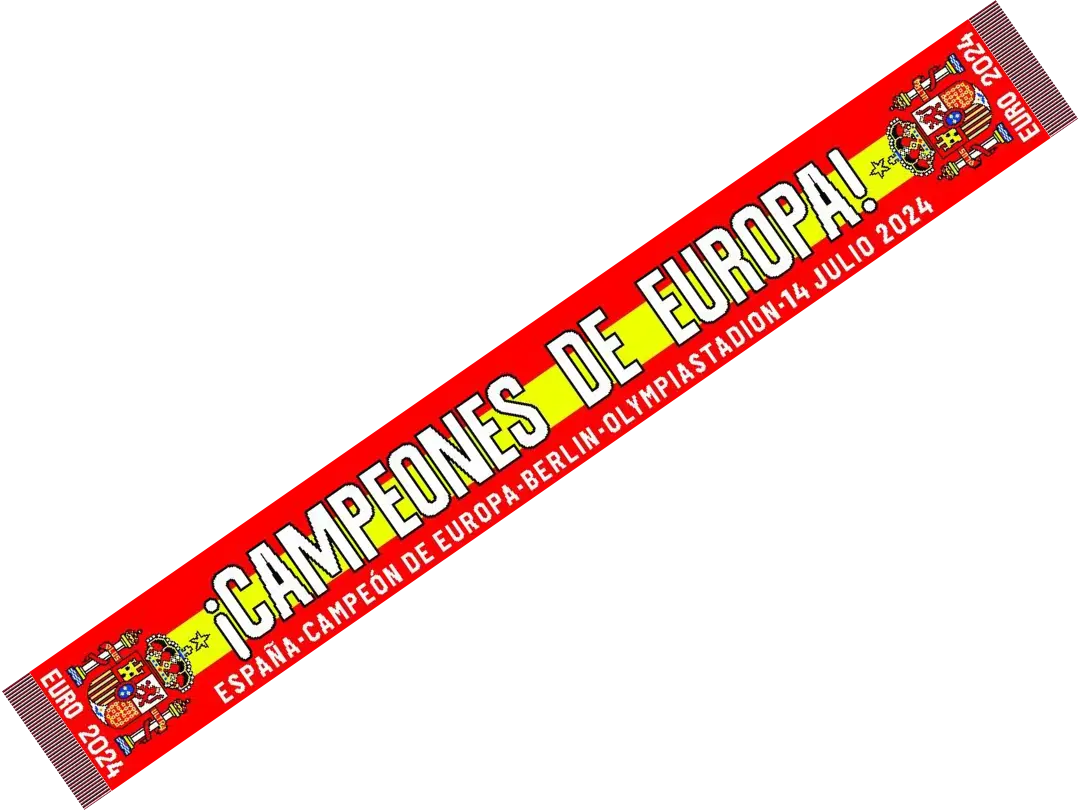
The Spanish national team has a unique fan base: it mixes the character of many regions, accents, and ways of understanding football. Life in the north is different from the south, the centre from the islands… but when Spain plays, all of that blends together in the same stand.
There, the Spain national team scarf becomes almost a common language. In the fan zone, in the stadium, or in a packed bar, seeing a wall of red scarves raised during the anthem creates a sense of unity that few things can achieve.
The chants—from the “}]the classic “Yo soy español, español, español” along with the more recent ones appearing in every tournament—always accompanied by scarves that wave, cross, and end up, many times, draped over the shoulders of someone who has celebrated a goal until they’ve lost their voice.
Spanish fans are demanding, yes, but they are also very emotional. In that context, a Spain national team scarf is the perfect accessory: when it’s time to grit your teeth, you hold it tight; when it’s time to celebrate, you wave it high in the air.
Why the scarf is key to a fan’s kit
You could go to watch the match wearing just any t-shirt. But when you put on a Spain national team scarf, you go one step further. Something changes:
- You feel “more part of La Roja” even if you’re just in your living room.
- You know that if there’s a group photo, your scarf will be front and centre.
- If you decide to hang it on the wall, suddenly your room feels much more football-oriented.
The scarf has several advantages over other items of clothing:
- It’s easy to wear: no matter what clothes you have on or what the weather is like, you can always add it.
- It stands out: a red and yellow scarf stands out even in a sea of people.
- It’s versatile: it works for the neck, the arm, the head (in an improvised way), and for decoration.
That’s why, when you think about gear to cheer for Spain, the Spain national team scarf isn’t an extra; it’s almost a fundamental element. The “}]}]the shirt is worn, but the scarf communicates.
How to choose your perfect Spain national team scarf
Choosing a Spain national team scarf isn’t just about grabbing the first one you see. If you want it to accompany you through several tournaments and look great both in the stands and in your room, it’s worth paying attention to a few details.
Design: classic, modern, or with a message
First and foremost is the style. You can go for a classic design, featuring the name of Spain, the crest, and nothing more, or look for something more modern, with patterns, gradients, and phrases.
Think about what fits you best:
- If you’re the type who remembers finals, extra time, and penalty shootouts, you might prefer a design that includes a date, a star, or a nod to past titles.
- If you like a clean aesthetic, a model with the main red, the crest, and the word “Spain” can be more than enough.
The important thing is that, when you see it, you feel like it speaks your same football language.
Colours: dominant red, but with nuances
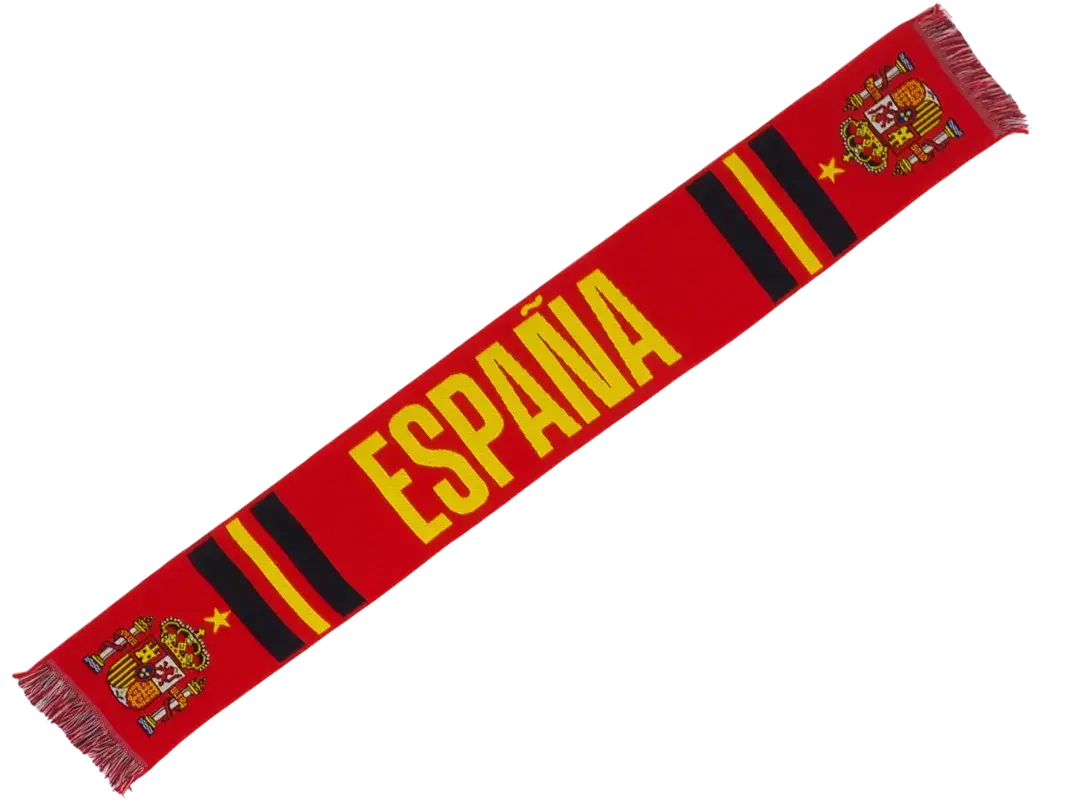
A good Spain national team scarf usually has red as the dominant colour, accompanied by yellow and, depending on the model, blue details. Ideally, it should respect the official tones; if it leans too much towards a dull red or a strange yellow, it can lose its character.
There are also “}]}scarves that play with dark backgrounds (black or navy blue) and details in red and yellow. They usually look very elegant and are perfect if you want something that pairs well with almost any coat.
Crest and details
The crest is fundamental. In a good design, it looks sharp, well-centred or perfectly placed at the ends. Check that the quality of the embroidery or the fabric is good: a Spain national team scarf with a poorly defined crest loses a lot of impact.
Also look out for details such as:
- Well-finished fringes.
- Clear typography for the text.
- Symmetry between both sides of the scarf.
They are small things that make the difference between a scarf you’re proud to show off and one you’re too lazy to take out of the drawer.
Scarf for the stadium, the pub, or your room
Not all scarves have to have the same use. Some people have a Spain national team scarf for “battle” and another more special one for decoration.
- For the stadium or the pub, you might be interested in a more durable scarf, designed to withstand conceded goals, spilled drinks, and euphoric hugs.
- To decorate your room, on the other hand, you might prefer a design that you love visually, even if you wear it around your neck less often.
Hanging it on the wall is one of the simplest ways to give your space a real La Roja touch. Above the bed, over the desk, or on the wall by the TV, the scarf makes every match feel more “}]}“important”.
If you are a collector, you can even create a small “scarf wall”: different models that you have lived through different tournaments with. Ultimately, they will all be variations of the same idea: your support for the national team.
Taking care of your scarf so it lasts through many Euros and World Cups
Once you have your Spain national team scarf, you want it to last for years. To do that, some basic care tips come in handy:
- Don’t just throw it into the washing machine with clothes that bleed colour or shed lint.
- Let it air dry, without being placed directly on radiators that could deform the fabric.
- If you hang it on the wall, try not to place it right where direct sunlight hits it all day, so the colours don’t fade.
You don’t need to treat it like it’s made of glass, but certainly with some affection. Think that, if you take good care of it, that scarf can accompany you through many final stages, many penalty shootouts, and many meetups with friends.
The scarf as part of your football ritual
Beyond aesthetics, a Spain national team scarf is often part of a small personal ritual. Some people:
- Only bring it out for official matches.
- Wear it from the group stage to “activate the luck”.
- Don’t take it off even if the match is a mid-week friendly.
We all have quirks: sitting in the same seat, watching the match with the same people, having the same thing at half-time… The scarf “}]get into the game. Putting it on is almost like telling the match: “I’m ready”.
And even though we know it doesn’t actually change the result, it helps you feel like you’re part of the story, not just watching from the sidelines. Ultimately, that’s what being a fan is all about: being involved, even if it’s from your sofa.
A scarf
Spanish national team
that speaks about you
Choosing a Spanish national team scarf isn’t just about buying a piece of fabric with nice colours. It’s choosing the symbol you’ll raise every time the anthem plays, the item that will appear in your celebration photos, and the detail you’ll hang in your room as a reminder of your passion for La Roja.
A good scarf blends history, colours, nicknames, memories, and something as simple as the feeling of being part of something when you wear it. If you care about the design, the materials, and choose the model that best matches how you live football, you won’t just be buying a mere accessory: you’ll be adding a small personal trophy to your life as a fan.
Because shirts change, players come and go, managers leave… but that Spanish national team scarf that accompanied you through great nights will still be there, hanging or folded, waiting for the next big match to do what it does best: helping you cheer for La Roja with everything you’ve got.