Second Division Scarves: the pride of the fans
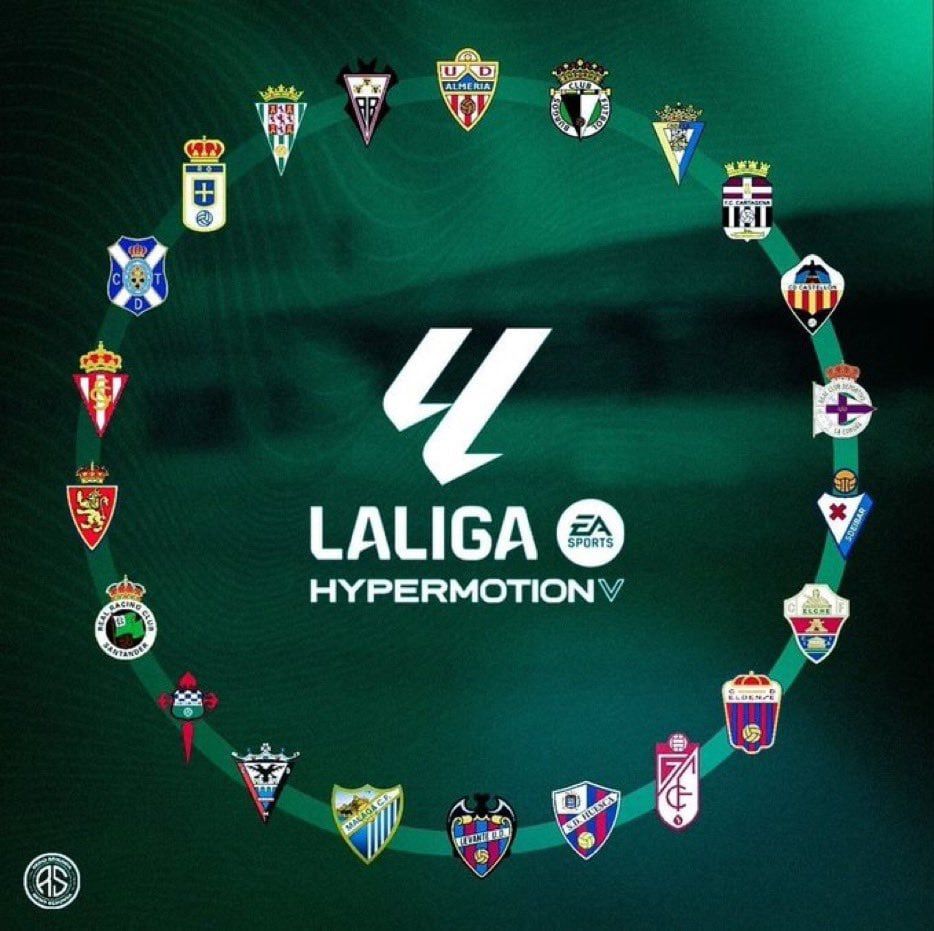
Some say LaLiga Hypermotion isn’t a league, it’s an endurance test. It’s not called “Segunda” because of its level, but because of “Hypertension”: one Sunday you’re dreaming of direct promotion, and the next you’re eyeing relegation. And in the middle of that rollercoaster, between frustrated promotions, endless playoffs, and 93rd-minute goals, there is something that always remains: the second division scarves and the fans who hold them high.
In Primera, they talk about spotlights, millions, and marketing; in Segunda, they talk about early mornings to travel by bus, pitches where you can smell the grass, and fans who have learned to suffer with a sense of humour. If there is one item that sums all that up, it’s the scarves: pieces of fabric that have witnessed tears, hugs, painful relegations, and resurrections that seemed impossible.
In this article, we are going to explore the universe of second division scarves with a real terrace vibe: colloquial, a bit funny, and with our hearts on our sleeves. We’ll start with the general magic of “Hypertension” and then dive into the colours, the history, and the fans of five teams that represent the spirit of this category like few others: Deportivo de La Coruña, Levante, Racing de Santander, Leganés, and Burgos.
The magic of the Segunda: welcome to “Hypertension”
Segunda is that league where you start the season saying “this is the year” and you end it swearing you’ll never get your hopes up again… until they announce the schedule again. It’s a category where no match is “easy”, where a newly promoted side can push a promotion contender to the limit, and where a three-game winning streak takes you from worrying about survival to eyeing the playoffs.
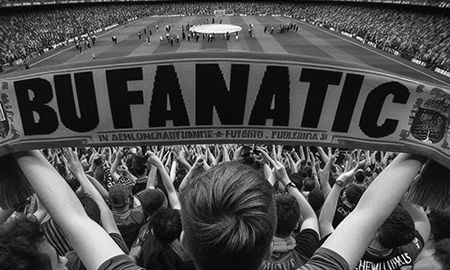
Segunda stadiums have something special: they are closer, more familiar, more “old school”.Here, the fan doesn’t just go to watch the match; they go to say hello to the person in the next seat, to debate the starting eleven, to moan about the referee, and to whip out their scarf at the key moment, even if it’s freezing cold. That’s why the second division scarves carry an extra emotional weight: they aren’t just a souvenir, they are a shield against the rain, the wind, and the days when the team isn’t at its best.
The most curious thing is that, in this league, feelings change from week to week. One day you’re a contender for everything; the next, you’re calculating how many points you need to avoid trouble. And yet, the stands remain full, the scarves stay raised, and the passion doesn’t drop even a degree. That is the Segunda: a mixture of suffering, pride, and dark humour that you only understand once you’ve lived it.
Segunda División Scarves: much more than just an accessory
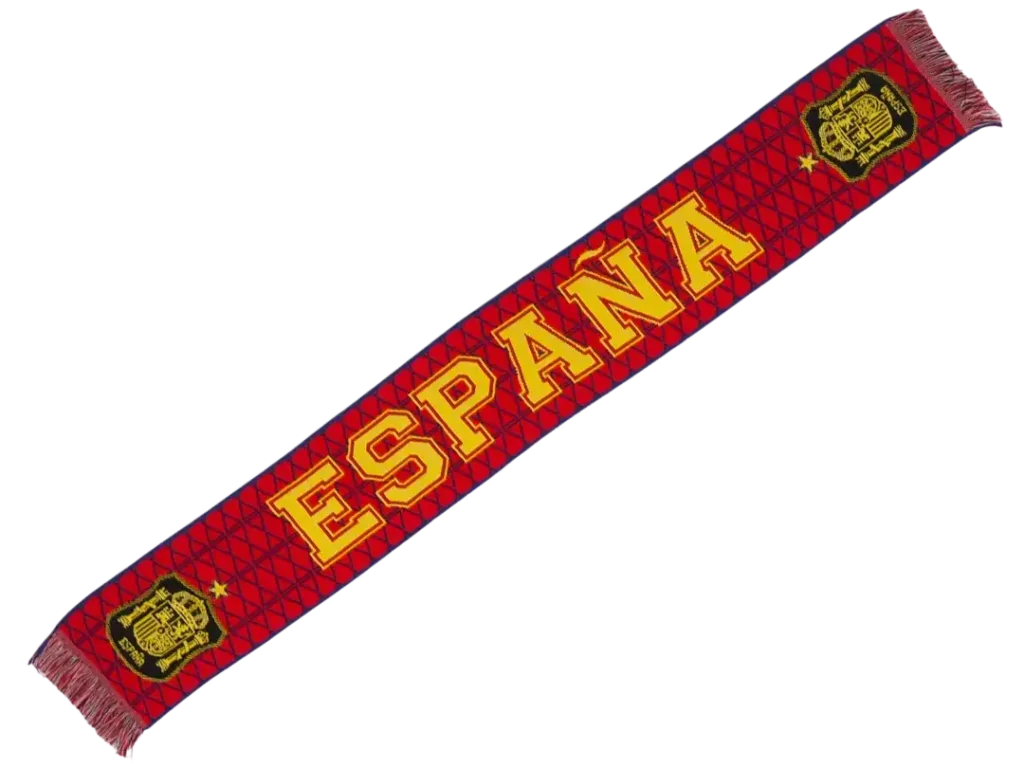
A scarf doesn’t score goals, clear the ball, or save penalties. But without them, football would lose one of its most defining traits. The second division scarves are, in reality, a sort of portable flag. They go from the neck to the air, from the living room to the stands, and from the stands to your bedroom wall.
For many fans, their first scarf arrives in childhood, a gift from a father, a mother, or a grandparent. It’s the moment an emotional contract is “signed” with certain colours. And the best part is that the scarf doesn’t grow out of you over the years. It doesn’t matter if the kid grows up or if time passes: the scarf still serves its purpose, and it still represents the same thing. It might be a bit worn, with the lettering not quite as perfect as before… but that is precisely what makes it more special.
In the Segunda, where budgets aren’t in the millions, identity carries even more weight. That’s why second division scarves often carry messages that go beyond the club’s name: messages of encouragement, historical slogans, nods to the city, jokes…the fans’ inner passion. Every scarf tells a story that isn’t sold by any multinational.
Colours, history, and fandom of five Segunda classics
Within this universe of passion, there are clubs that have earned a special place in the memory of the Hipertensión. Teams that have touched glory, suffered relegations, been reborn, and turned their scarves into symbols of resilience. Let’s take a look at five of them: Depor, Levante, Racing, Lega, and Burgos.
Deportivo de La Coruña: blue and white against nostalgia
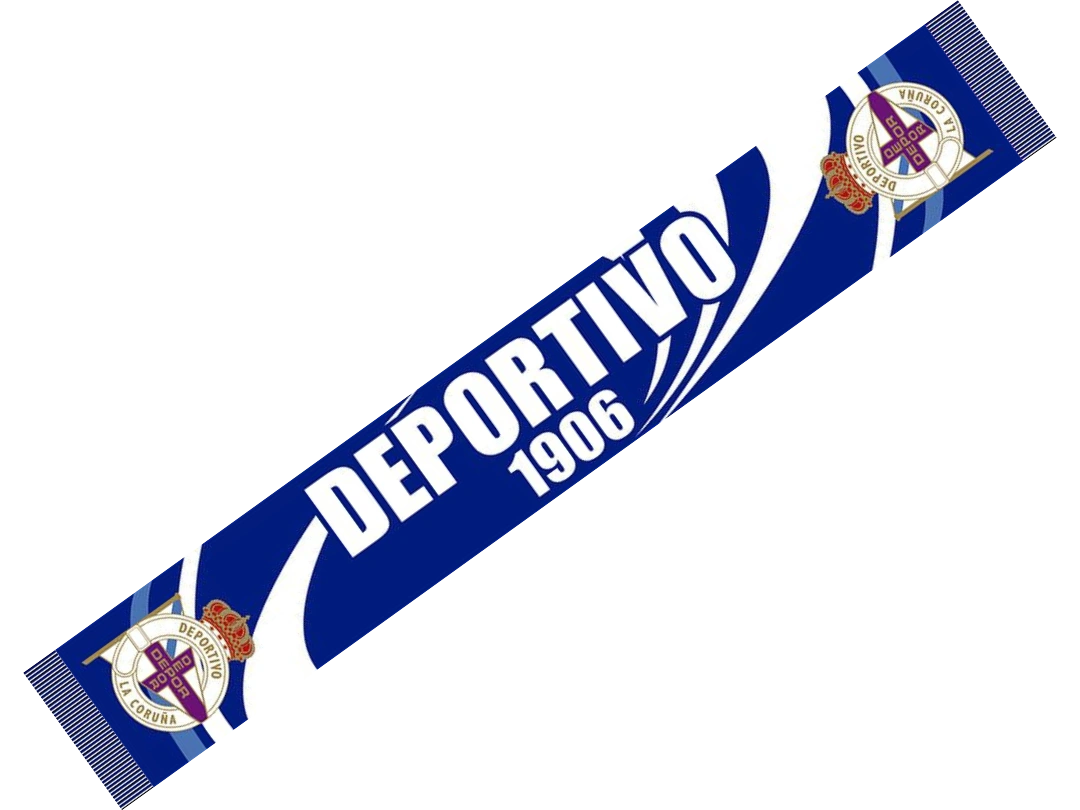
The Deportivo de La Coruña is one of those clubs that, when you look at its history, seems “too big” to be in Segunda. But that is precisely what gives its scarves such an intense emotional weight. The blue and white stripes are not just the colours of a club, but memories of an era when Riazor saw European giants pass through.
Today, Depor fans continue to fill the stands with their scarves held high, mixing nostalgia and hope. Every time a child receives their first blue and white scarf, they aren’t just receiving a piece of fabric: they are inheriting a history of leagues, cups, relegations, and returns. In Segunda, Depor has become used to living in “permanent rebirth” mode, and its scarves are a way of saying: “We are here, and we are coming back”.
On cold days by the sea, when the wind sweeps into Riazor, the scarf doesn’t just warm your neck: it also warms your faith in the team. A faith that, in A Coruña, refuses to disappear.
Levante UD: Granotes who never give up
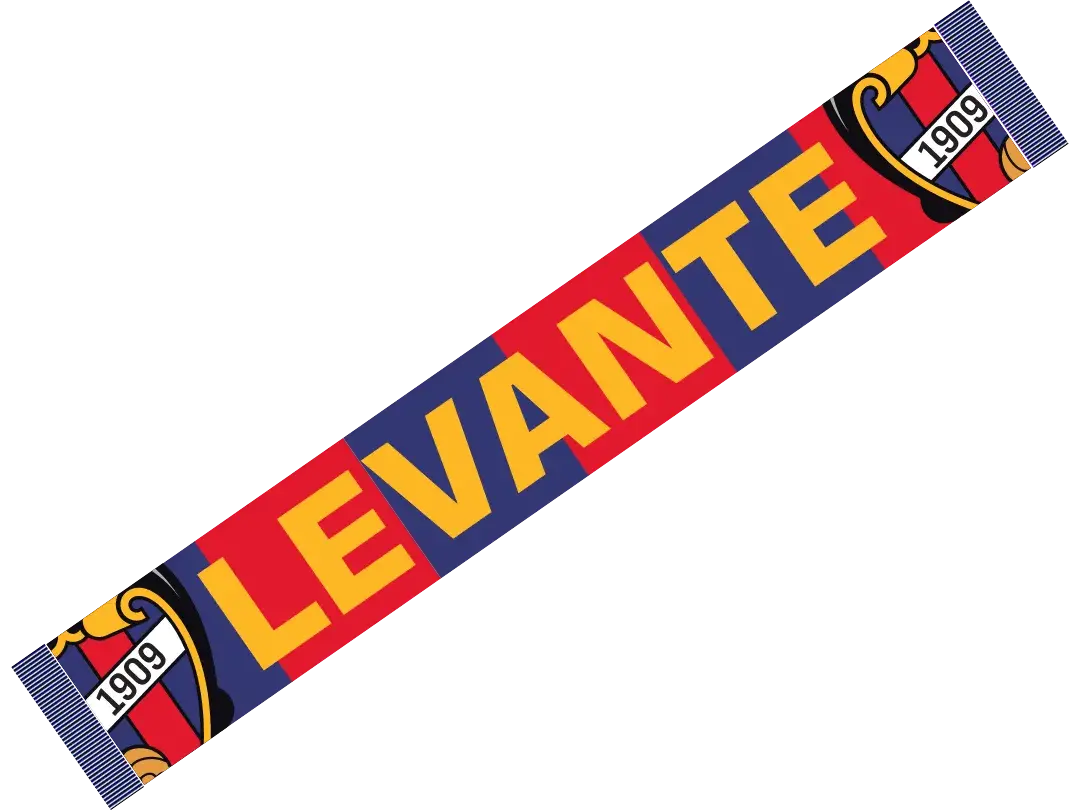
The Levante UD is synonymous with quiet struggle. They don’t make as much noise as other clubs, but they are always there, competing, fighting for every point, and living between promotions and relegations like someone riding a rollercoaster out of habit. Their blue and garnet colours are a banner in the Orriols neighbourhood and beyond.
Levante scarves have something very special: they represent a fanbase that has learned to live with sporting instability without losing their sense of humour. It doesn’t matter if the team is on the verge of promotion or fighting to avoid relegation: the Granota pulls out their scarf, sings, and pushes until the very end. And when a match turns into one of those typical crazy Segunda encounters, with goals for and against in the final minute, that’s when the scarves are waving as if they were a gamble with fate.
In Segunda, the second division scarves of Levante are almost a symbol of that mix between suffering and pride that defines the category. Because if there is one thing the Granotas have, it’s that they never truly give up.
Racing de Santander: green, sea, and a loyalty that withstands relegation
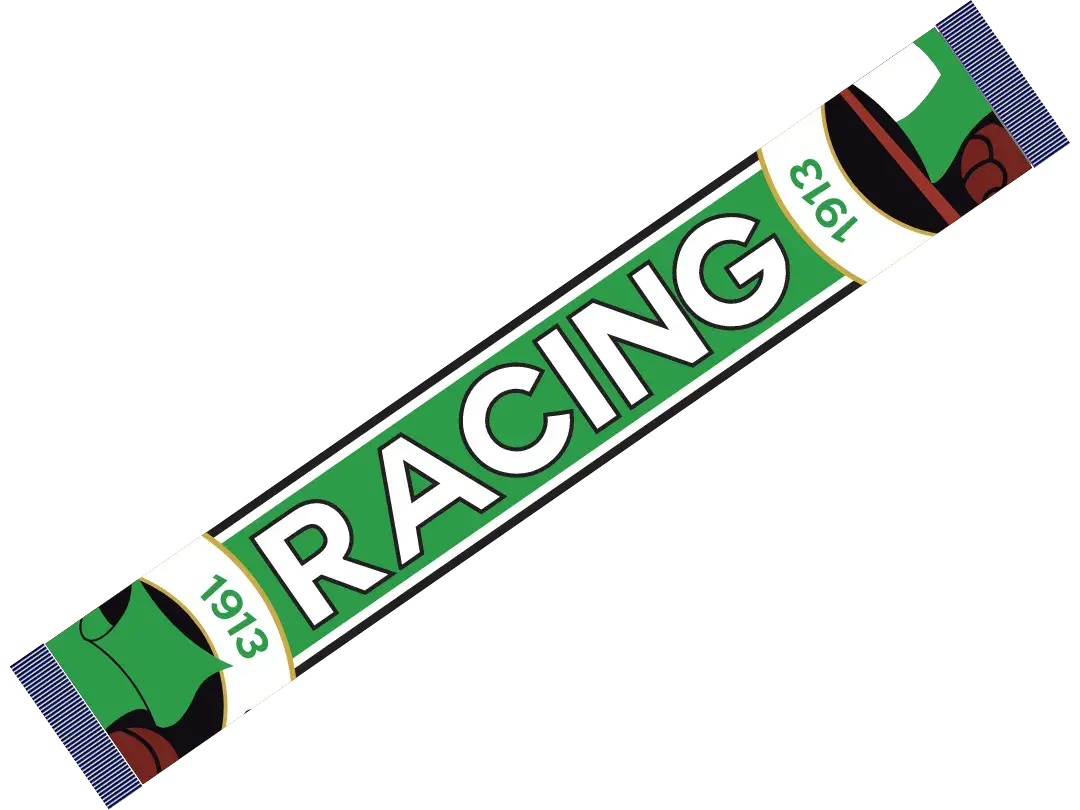
The Racing de Santander is one of those clubs that seems built on pure tradition. Their green and white colours are associated with El Sardinero, the Cantabrian Sea, and a fanbase that has shown, year after year, that the division matters less than the feeling.
Racing scarves are a classic in the stands: green, often with “}}]the city’s name in big letters and, occasionally, with nods to the club’s history. They have lived through sweet moments, but also difficult relegations, institutional problems, and stages of uncertainty. And yet, the fans have always been there, scarf around their necks, as if the club and the stands were one and the same.
In a league as volatile as the Segunda, a Racing fan knows that everything can change in just a few matchdays. But there is something that never changes: the gesture of raising the scarf when the anthem plays, even if the scoreline isn’t on their side. That is the essence of the second division scarves: symbols of loyalty that stand the test of time.
CD Leganés: the ‘pepineros’ and neighbourhood pride
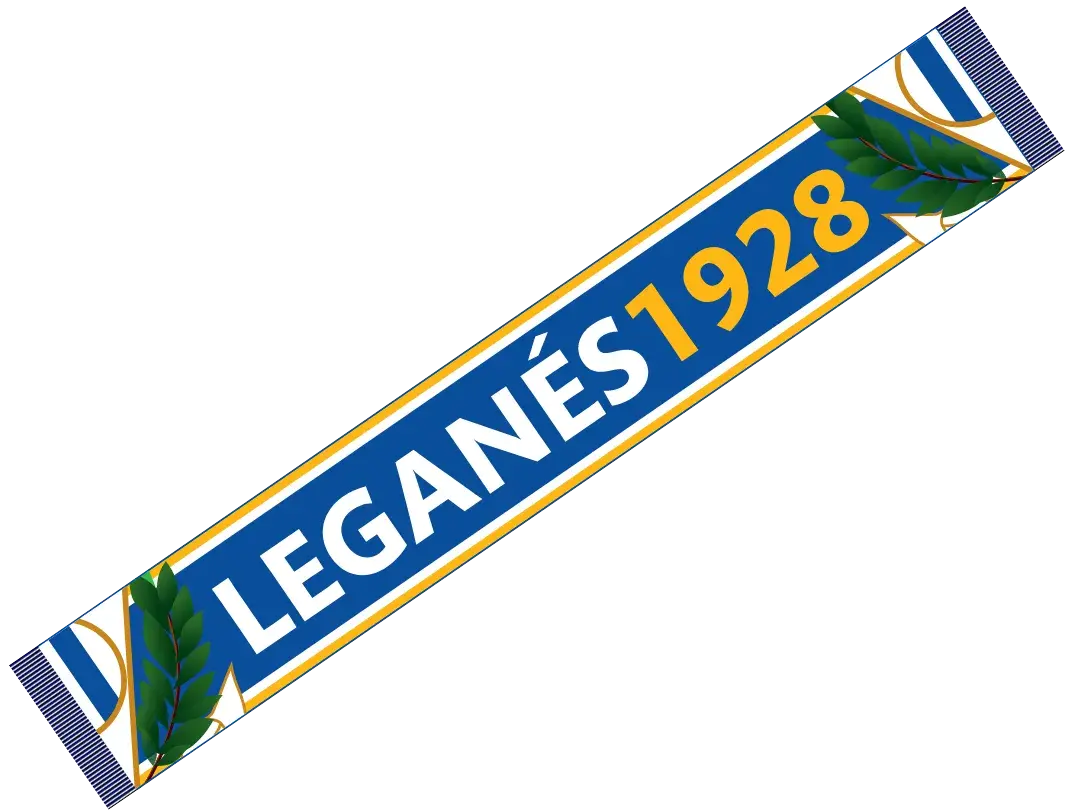
The CD Leganés has turned the term “pepineros” into a mark of identity. Their recent history is full of chapters that, from the outside, seem impossible: promotions, brilliant seasons, epic duels against giants… and, of course, returns to that Segunda division they know so well.
The Lega scarves, with their blue and white colours, are a shout of neighbourhood pride. They represent a way of understanding football that is close, fun, and has a bit of a rogue edge. In Butarque, the scarf is raised both to celebrate goals and to support the team during bad runs. And in the Segunda, these runs happen—it’s almost an unwritten law.
The pepinero fan knows that in such a changeable category, you could be three points away from promotion one minute and looking fearfully at the bottom zone the next. That’s why the scarf works as a reminder: no matter what happens, Lega is Lega, and the neighbourhood always shows up.
Burgos CF: white, black, and a fanbase that has returned to stay
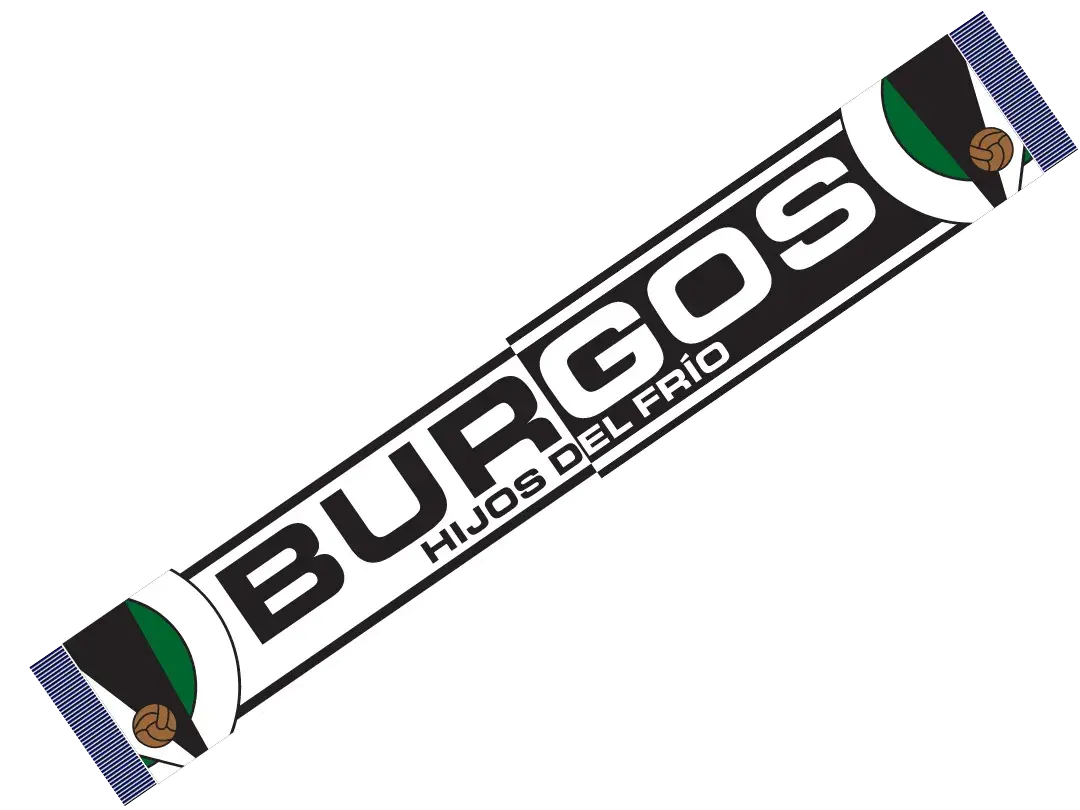
The Burgos CF is another example of a club that has gone through all possible stages: disappearances, reappearances, lower categories, and struggles to return to where they feel they belong. Their white and black colours have become a very recognisable identity, and their scarves reflect that spirit of constant reconstruction.
Cold nights at El Plantío are almost a cliché, but they are also a mark of authenticity. In those matches where you can see your breath in the air, the scarf becomes something more than a symbol: it is survival, it is warmth, it is a way of saying “it doesn’t matter the cold, the league, or the score.”
Burgos fans have learned to enjoy the Segunda División with a mix of realism and ambition. They know that the “Hipertensión” doesn’t forgive mistakes, but they also know that, with a scarf around their neck, the sense of belonging is stronger than any league table.
Why Segunda scarves are just as addictive as Primera ones
From the outside, it might seem like the glamour is in Primera. But anyone who has stepped foot in a silver category stadium knows the atmosphere is different. Here, voices are heard more clearly, chants are felt more deeply, and you can really see who shows up every Sunday, rain or shine.
The second division scarves represent precisely that: constancy. They aren’t just raised on European nights, but also during the typical grey Saturday match at 4:15 pm, with wind and no real epic saga. And, paradoxically, it is on those days when the fans’ love is most visible.
Furthermore, Segunda scarves often have a “more authentic” touch. They aren’t as designed for the shop window…international for the everyday fan: inside jokes, historic slogans, nods to the city. In a way, they are pieces of local identity that travel in backpacks, hang from cars, and decorate living rooms.
How to choose Segunda División scarves that stay with you for life
When choosing Segunda División scarves, it’s not just about picking pretty colours. A good scarf is part amulet and part sentimental archive. Ideally, it should represent the team, yes, but also a specific era: a promotion, an unforgettable season, or a year you returned to the stadium after a long time.
Many fans opt for classic scarves, with the club crest and name clearly visible. Others prefer retro designs that recall mythical eras. And there are also those who collect scarves from specific matches: finals, playoffs, anniversaries. Over time, that collection becomes a visual summary of a fan’s life.
The beauty of scarves is that they never expire. A shirt might become too small, boots wear out, a ball goes flat. A scarf, however, lasts. It can go from around your neck to the back of a chair, from there to the headboard of your bed, and years later, to a drawer that is opened every now and then to relive memories. That’s why they are so special within the world of football gifts.
When a scarf tells your team’s story
The Segunda, “la Hipertensión”, is a league of strong emotions, intense joys, and epic lows. A category where everything changes except one thing: the presence of the fans, match after match, scarf in hand. In this context, Segunda División scarves are not just a simple accessory, but a kind of woven chronicle of what it means to love “}}]a club that goes beyond the division.
It doesn’t matter if you support Depor, Levante, Racing, Lega, Burgos, or any other team in the league. When you raise your scarf, you are saying much more than just “come on”. You are saying: “I was there when we were relegated, when we almost promoted, when we scored in stoppage time and when we missed a decisive penalty. And I’m still here.”
Teams may go up and down, squads may change, and managers may come and go. But that scarf that started as a gift, an impulse buy, or a matchday whim, stays with you. Around your neck, at the stadium, on cold nights, on the wall… and, above all, in your heart. That is the true greatness of the Segunda: in those stories that only those who have lived the league from the stands can understand, scarf wrapped tight and soul in the colours.